Louis Sullivan
1856-1924
Louis Henri Sullivan was born on September 3, 1856, in Boston, Massachusetts, the son of Irish and Swiss immigrants. From childhood he displayed a fierce, restless intelligence — one that would eventually reshape the American city skyline and seed an entire century of modern design.
He studied briefly at the Massachusetts Institute of Technology before moving to Philadelphia to apprentice with architect Frank Furness, absorbing that master’s bold ornamental language. A restless year later, Sullivan arrived in Chicago — a city convulsing with energy after the Great Fire of 1871 — and found his true theater. He enrolled at the École des Beaux-Arts in Paris, then returned to Chicago in 1879 to join Dankmar Adler’s firm. The two men became partners in 1883, and the office of Adler & Sullivan would soon become the most consequential architectural practice in America.
Together they pioneered the commercial skyscraper during Chicago’s great building boom, solving the engineering and aesthetic problems of the new steel-frame construction with unprecedented boldness. Sullivan believed architecture should express its own era honestly — not dress itself in borrowed Greek columns or Gothic arches. His revolutionary dictum, “form ever follows function,” became the founding creed of modern architecture.
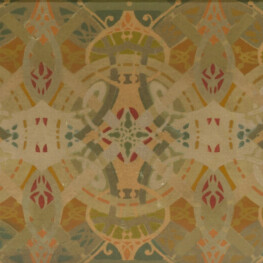
Yet Sullivan’s ornament was never cold or mechanical. He covered his buildings in intricate, organic decoration — swirling foliage, geometric interlace, botanical fantasies rendered in terracotta — believing that beauty and utility were never at odds. A building could be both rational and alive.